LMS FOR HEALTHCARE
In the healthcare sector, keeping up with new advancements and regulations is vital. Our LMS for healthcare training helps you stay agile and compliant.
In the healthcare sector, keeping up with new advancements and regulations is vital. Our LMS for healthcare training helps you stay agile and compliant.

We’ve created effective, easy to use learning management systems, based on the Totara platform, designed specifically for healthcare professionals. They offer flexible, accessible, and tailored learning solutions. They support timely updates, employee certification, reporting, and compliance training to meet industry demands.
Our team works closely with you to create an LMS that fulfils your current needs and continues to provide high-quality education for years to come. We can deliver a learning management system that keeps your staff informed, compliant, and ready to excel in their careers.
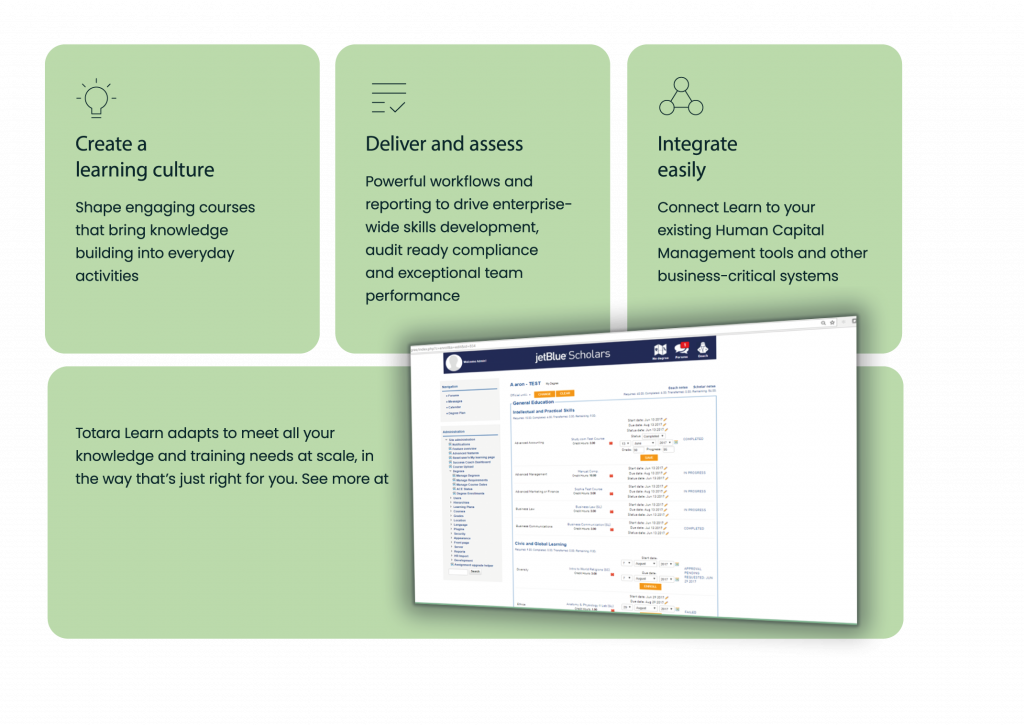
Totara Learn transforms business training by improving employee engagement and staff retention, saving your organization money.
Equip your staff with the training they need to provide quality care. Our LMS ensures they stay updated on regulations and patient care skills.

Tailor training to specific healthcare roles with our customized courses, enabling faster, more effective learning for your team.

Meet healthcare regulations with targeted training, detailed reporting, and certifications to ensure your staff stays compliant.
Training anytime, anywhere. Staff can access materials on mobile or desktop, fitting learning into their schedules.
Streamline onboarding with standardized courses, helping new staff integrate quickly while maintaining high standards.
Support retention with continuous, effective training. Our LMS keeps staff engaged and reduces turnover in your healthcare organization.
Our comprehensive healthcare LMS solution includes bespoke design, development and configuration, integration, hosting, consultancy, training, and best-in-class after-sales support.

Our bespoke LMS development enables you to design learning paths tailored to specific roles within your healthcare organization, ensuring relevant, reliable, and user-friendly training.

We create healthcare training content that enhances learning outcomes, from compliance and regulations to role-specific clinical skills.

We don’t just deliver an LMS—we’re here to support you. Whether troubleshooting, meeting new healthcare training demands, or adapting to industry changes, our experts are always ready to help.

Provide personalized training for various roles, from nurses and doctors to administrative staff, to address their unique learning needs and improve healthcare delivery.

Our responsive LMS allows healthcare staff to access training anytime, anywhere—at home or commuting—ensuring they stay certified and compliant.

As healthcare regulations and best practices evolve, our team provides ongoing consultancy and training to help you stay ahead of industry changes.

Our managed hosting solutions deliver 99.9% uptime, ensuring uninterrupted access to essential training for your healthcare teams.

Custom dashboards simplify reporting and tracking. Create reports, schedule exports, and assign managers to teams easily.
With over 20 years of experience and 4,000+ clients worldwide, we are a leading provider of bespoke Totara Learn LMS solutions for healthcare organizations.
We’re Platinum Totara Partners; we’ve got the credentials to support organizations like yours.
We provide custom development to align LMS features with your business needs, ensuring technology adapts to you.

With offices in the US, UK, and Poland, we offer local market knowledge and 24/7 support.

We offer ongoing consultancy, training, and support. Our eLearning experts work closely with you as your business needs evolve.
Our healthcare-focused Learning Management System (LMS) is designed to meet the unique training and compliance needs of medical organisations. Whether you’re a hospital, clinic, care provider, or healthcare training body, our LMS offers tailored solutions to ensure consistent, compliant, and efficient learning across your teams.
Healthcare organisations face the ongoing challenge of keeping staff up to date with essential training such as safeguarding, infection control, and data privacy. An LMS automates course delivery, tracks completions in real time, and ensures teams stay audit-ready without the manual admin burden.
Introducing new staff efficiently is vital in busy clinical environments. An LMS allows teams to assign role-specific onboarding modules that can be accessed before the first shift, helping new joiners understand procedures, protocols, and expectations—speeding up their contribution to patient care.
Non-clinical staff play a vital role in the patient experience. An LMS provides these teams with access to essential training in areas like dementia awareness, communication, infection control, and health and safety, ensuring a well-rounded and informed workforce across all departments.
For organisations operating across several locations, maintaining consistent training can be a challenge. An LMS centralises course delivery and enables shared learning resources, giving every location access to up-to-date training content while allowing local oversight and progress tracking.
Healthcare professionals benefit from continuous learning beyond compliance. An LMS can host modules on trauma-informed care, mental health awareness, communication, or resilience—supporting teams to provide more holistic, patient-centred care while boosting morale and retention.
Many healthcare staff work irregular hours or in mobile roles where desktop access is limited. A mobile-first LMS enables them to complete training on the go—whether during shift breaks or between appointments—without disrupting their ability to deliver frontline care.
Medical providers often need to train external stakeholders—such as patients, carers, or partner organisations—on devices, systems, or care protocols. An LMS can host public-facing modules with assessments and certifications, helping to reduce support demands and improve safety outcomes.
Healthcare settings involved in clinical research or teaching require highly specific governance training. An LMS supports this with modules for research compliance, data handling, lab safety, and academic integrity—ensuring that all contributors meet institutional and regulatory standards.

Webanywhere used rapid elearning techniques to create and digitise content for a large charity.

We delivered an easy-to-use, multi-functional healthcare learning platform for UCLH.

The multi-tenancy solution implemented allowed us to host several clients on the LMS.
A LMS provides a flexible way to deliver healthcare education. It allows organisations to deliver learning and educational programs and track employee progress. Our LMS is designed to be accessible and flexible and ensure that your staff always complies with the latest healthcare regulations for your sector.
A LMS offers many benefits to healthcare organisations. It can provide flexible training, ensuring employees can access educational materials whenever they have time. It saves companies money, as the courses only need to be set up once, with no need to call in external trainers or use physical resources. A well-implemented LMS will also ensure employee compliance with all current regulations while providing healthcare providers the tools to ensure their employees receive the proper education.
When selecting an LMS for a healthcare organization, consider factors like ease of content integration, user-friendly interface, mobile accessibility, and data security. Ensure it allows for efficient tracking of educational progress, compliance with healthcare regulations, and customization to accommodate specific institutional needs.
An LMS ensures compliance in healthcare organisations by providing the right training to employees. Courses can be updated to meet the latest regulations, and reporting tools provide key details on whether the employee has received the right training courses.
Using the Totara Learn platform, you can create a robust, educated, and skilled workforce. By taking advantage of the automation Totara offers, your healthcare professionals can focus on updating courses, keeping employee training current, and monitoring other key performance indicators.